Partner stories
From Arnhem to Vietnam
Sjaak Smakman
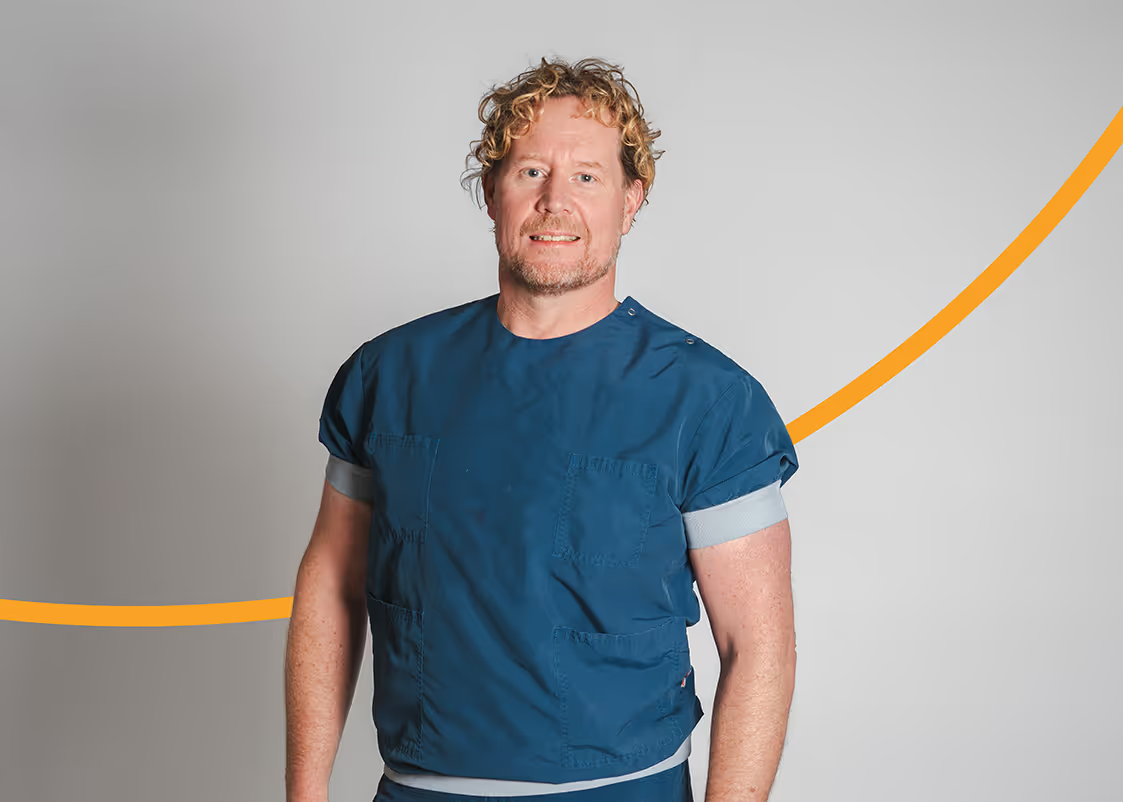
A story with Dr. Johan Vehof
Well, why did Dr. Johan Vehof become a doctor?
“I think it’s because I enjoy helping people, analysing problems, solving them and creating things with my hands.” As a child, he was always busy with technology. “First I tinkered with my cross bike, then with mopeds and later with motorbikes.” He also broke his arm twice as a child. “I was fascinated that I went to the hospital and they were able to fix it.”
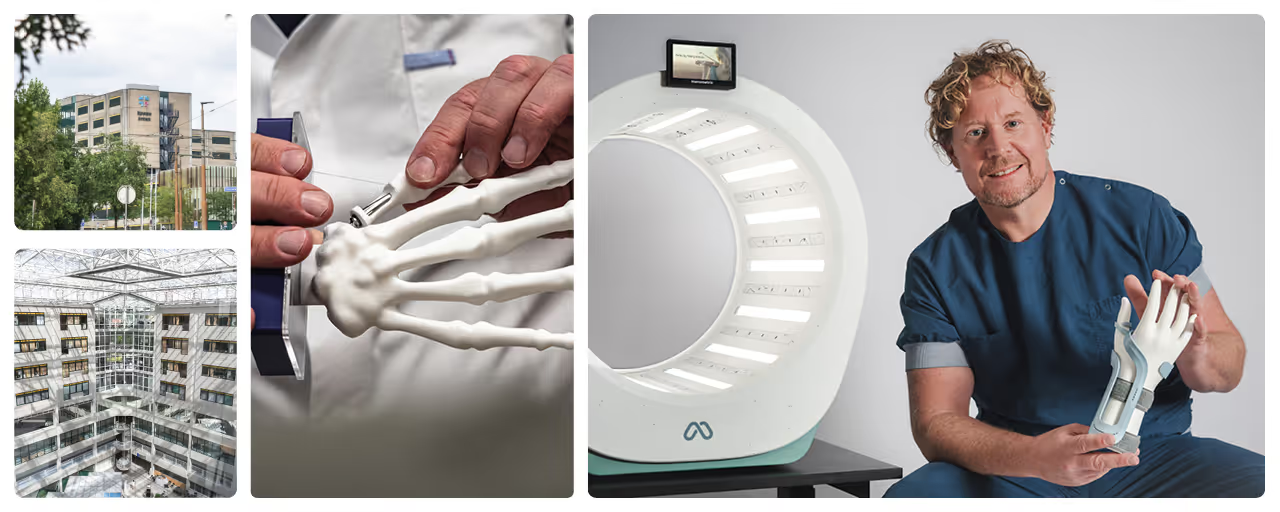
Many years later, Vehof is one of the most renowned hand surgeons in the Netherlands and has been working at the Rijnstate hospital in Arnhem for fourteen years. In addition to hand and wrist surgery, as a plastic surgeon he also specialized in facial surgery, such as treating cleft lip, jaw and/or palate, a congenital split in the upper lip, jaw and/or palate.
Care4Tina
That specialisation brought him into contact with the Care4Tina foundation more than fifteen years ago, when he was still working at Radboud University Medical Centre in Nijmegen. In 2009, one of the founders went to work as a volunteer at a children’s home in the former Chinese capital of Xi’an, where she was touched by a little girl named Tina. Tina had a cleft lip and palate and had been abandoned, partly because of this. The combination of the one-child policy, limited insurance coverage and high childcare costs meant that many children with congenital conditions were given up.
A year after Care4Tina was founded, Vehof assembled a medical team and travelled to Xi’an for the first time to operate on children with cleft palates. His motivation: “When I became the father of twins, I realised even more strongly how much it matters where you were born.”
Until the coronavirus pandemic broke out, he travelled annually with the foundation to the project in the city of Xian, which has a population of twelve million. Although there is a large children’s hospital there – “5,000 children come there every day” – not all parents can afford to pay their share of the surgery. Once abandoned, it is of course even more difficult to get the right help.
{{gallery1}}
Long-lasting effect
In total, he and his team helped nearly 500 children directly through one or more operations, and many more indirectly. The Chinese method of operating proved to be less than optimal. “If you perform surgery on the palate too early or with the wrong technique, the jaw will not grow properly. You end up with scar tissue and growth inhibition.” The doctors there saw many children with a form of crossbite and did not really understand why. “An important part of the initiative was therefore to teach new techniques and introduce the correct treatment protocols. That is the modern way of providing assistance, ensuring that your work has a lasting effect.”
In 2018 and 2019, Vehof also participated in a project in Sumatra, in a hospital and rehabilitation centre run by the Franciscan Sisters. There, in addition to cleft palates, he mainly treated burns. “Burns caused by open fire and hot water are very common there. I saw children who were in a really terrible condition. Deep burns often cause severe scarring, which can cause a finger, hand, wrist, elbow, armpit, knee or neck to become stuck in a forced position.”
Help2Smile
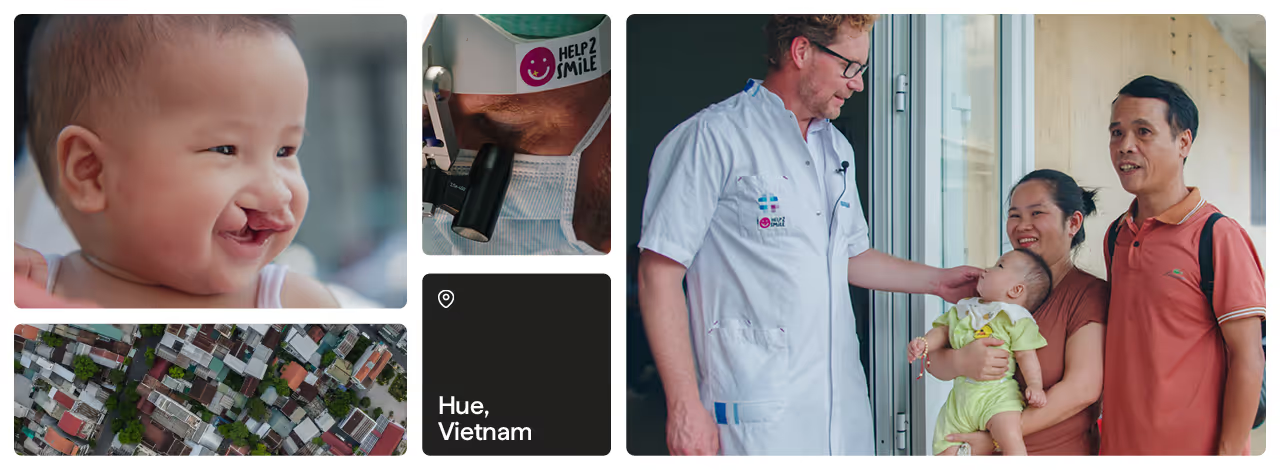
When Care4Tina’s goals were achieved during the coronavirus pandemic, Vehof founded the Help2Smile foundation as a spin-off with two friends in 2021. The goal: to provide medical assistance wherever it is needed.
The foundation’s ambassador is TV presenter and culinary author Janny van der Heijden. “When I asked her if she knew anyone who wanted to be an ambassador, she spontaneously said, ‘I’d love to do that.’” Vehof says, “I am genuinely happy with her commitment and enthusiasm. She is a committed and warm person with her heart in the right place, and thanks to her visibility she can truly make a difference.”
In May 2024, Vehof traveled to Vietnam with the team for the first time. Cleft conditions are common there, presumably partly due to the aftermath of the Vietnam War and the use of the chemical Agent Orange. This substance is also linked to the development of spina bifida and various forms of cancer.
The second initiative is scheduled for April 2026. The plan is to operate annually in Vietnam for five years, provide education, and train doctors so that Vietnamese physicians in Hue, just like Chinese doctors in Xi’an, can eventually carry out the work completely independently.
Vehof is also active as a board member of the Interplast Holland foundation. Within Africa, including Ghana, the Interplast goes digital project is underway. In this project, medical issues are discussed and possible solutions shared through monthly online case discussions with local doctors. “It’s really a two-way street,” he emphasises. “People often think that healthcare in Africa is less well organised, but we are constantly amazed by the knowledge and ingenuity of the doctors there.”
www.help2smile.nl
Complex anatomy
In the Netherlands, Vehof has been a board member of the Dutch Society for Hand Surgery for almost ten years and has now been active within the Dutch Society for Rheumatic Surgery (Nerass) for four years. Over the past decade, he has increasingly focused on hands and wrists. He treats virtually the entire spectrum of hand and wrist problems: from Dupuytren’s disease and carpal tunnel syndrome to osteoarthritis and spastic arm and hand problems.
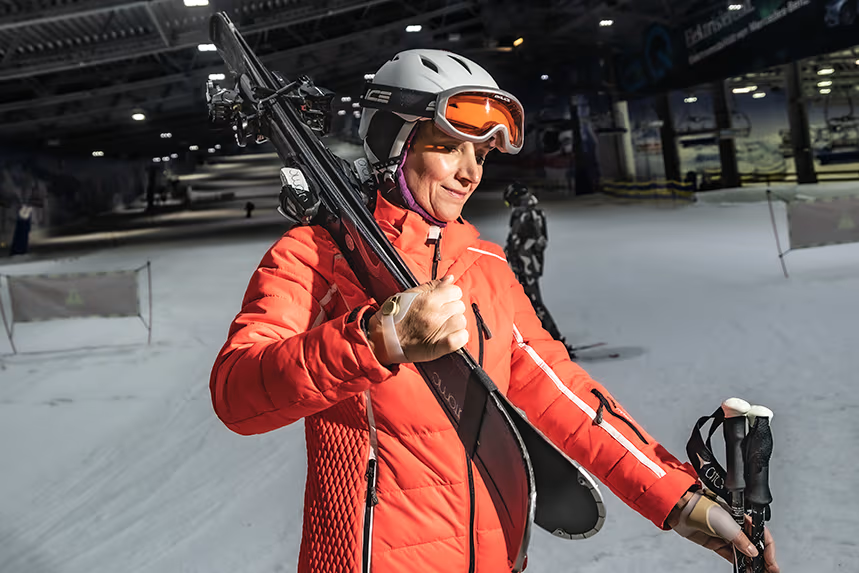
“Hands have an incredibly complex anatomy, which is what makes them so interesting to me. When treating patients, I always look for the person behind the patient: who they are, what they do, what they enjoy, what is important to them. The best thing is when people are pain-free again so that they can get back to work, sport or their hobbies.”
{{gallery2}}
Brace
To clear up a misunderstanding: “People often think that a visit to a hand surgeon automatically leads to surgery. But we often start with conservative treatments, such as hand therapy or wearing a splint.” The symptoms then often disappear or diminish to such an extent that surgery is not necessary.
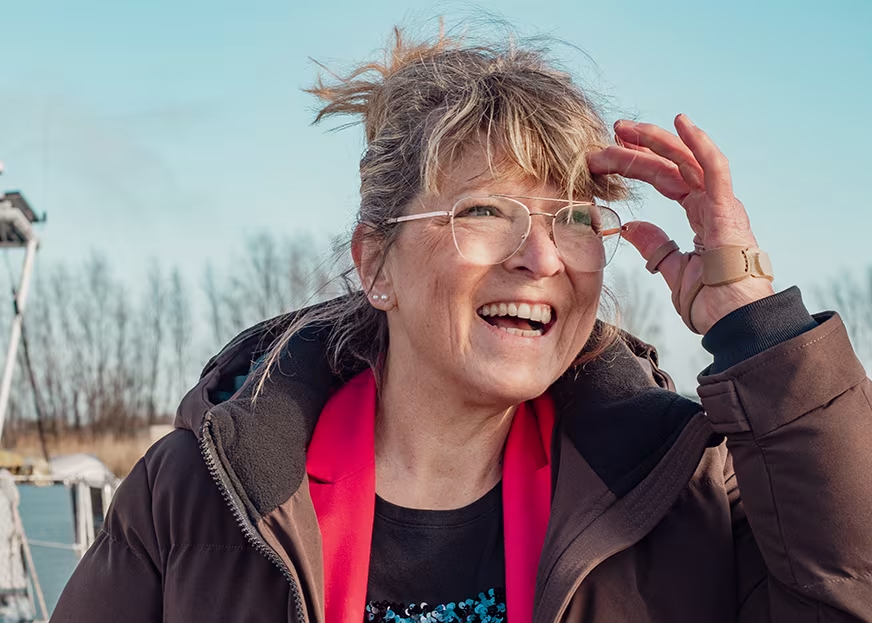
“That’s where Manometric comes in: their braces are not only functional, but also comfortable and attractive. And that’s crucial, because if a brace is uncomfortable or doesn’t look good, people simply won’t wear it. I’ve noticed that patients with a Manometric brace are often very satisfied.”
One third
“I am pleased that we now have two ManoX scanners in Arnhem: one here at Rijnstate and one at Handtherapie.net on Van Oldenbarneveldtstraat. We work closely with hand therapy and hand rehabilitation, Hand en PolsCentrum (HPC).”
“Hand and wrist care is teamwork. I always say: a third of the result comes from the surgeon, a third from the hand therapist and a third from the patient themselves, who does their exercises. The therapist acts as the patient’s coach, ensuring that the patient knows what to do and is motivated to perform the exercises properly and consistently.”
The brace of the future? “As far as I’m concerned, it will be a smart brace, equipped with sensors that transmit information about the progress of recovery to the therapist and surgeon. This allows you to monitor live whether someone is recovering well and make timely adjustments if necessary.”
How do I get a custom brace?
We've put together a short check to help you quickly find out if a brace is a good solution for you, including a personalised step-by-step plan to get started as soon as possible