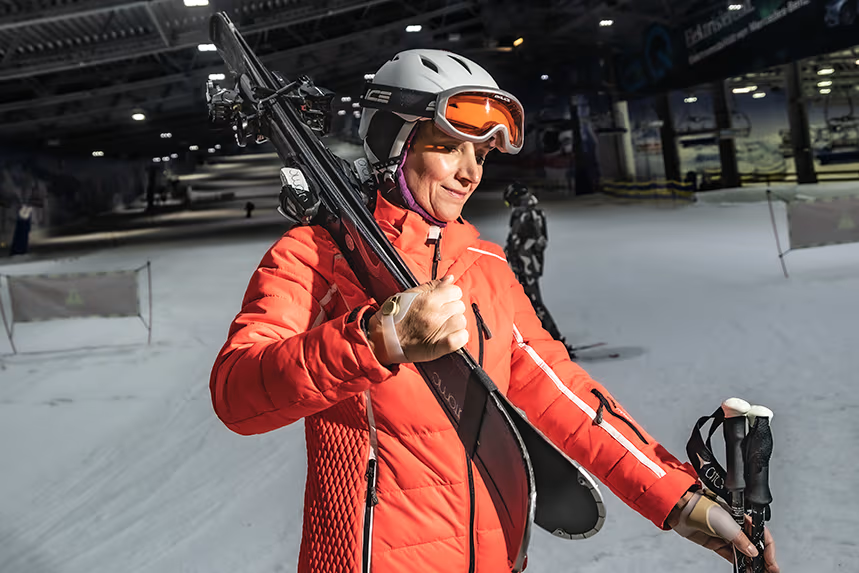
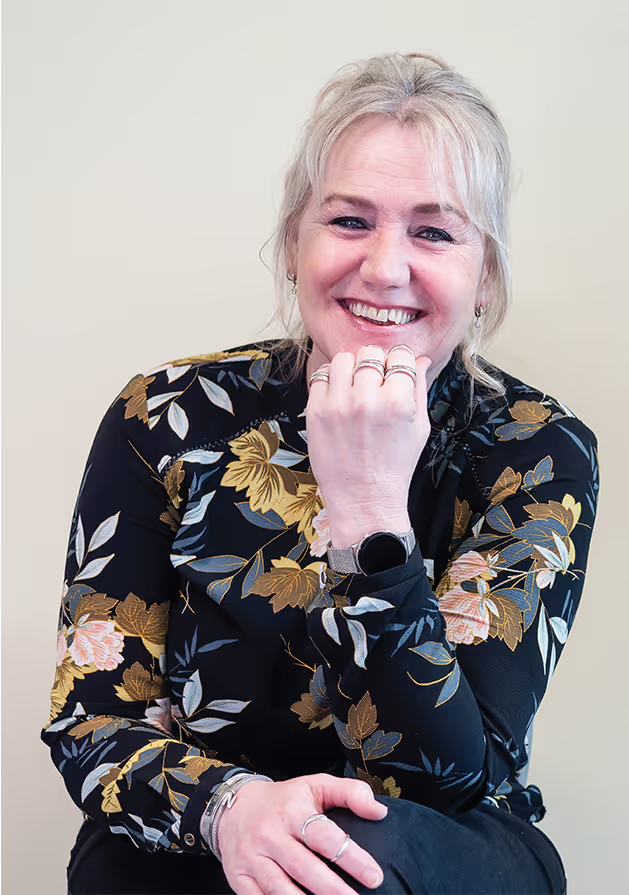
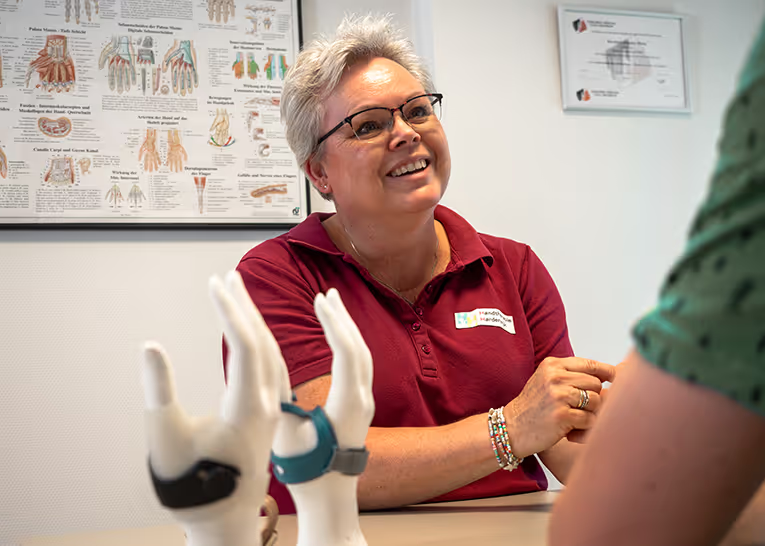

Kerensa Douma is one of those people who packs 25 hours into a day. This Friday afternoon in November, she tells us that she has three performances with three different companies in the coming week, playing the flute, alto flute and piccolo (“I do wear ear protection, though”). She has just completed her training as a voice actor (“I came across it on social media and thought: I’m just going to do that”) and the website stemstudiokerensa.nl is already live.
But above all, she has been an occupational therapist for thirty years and has had her own hand therapy practice in Harderwijk for exactly ten years. After several years in nursing homes, she started working at the Jansdal hospital in her hometown in 2009. There she saw that hand problems were almost exclusively the domain of physiotherapists. But why, she wondered: “I decided fairly quickly to train as a hand therapist. I also really enjoyed it, because you’re working with your hands all day long.”
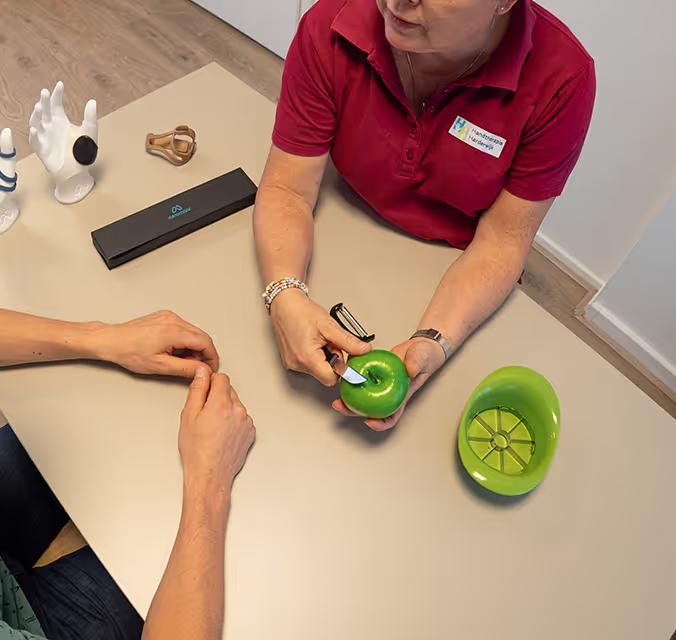
In my experience, physiotherapists and occupational therapists can complement each other when it comes to hand problems. If someone can only close a jar with great difficulty or cannot spread butter on a slice of bread, you can treat them and give them exercises to alleviate the symptoms, but it is not uncommon for the symptoms to return. As an occupational therapist, you look at the bigger picture: how exactly did these symptoms arise? Once you know that, you can look at how to do things differently. To give an example: someone experiences a lot of pain when wringing out a cleaning cloth while cleaning the kitchen counter. But you can also clean that counter with a sponge, which you squeeze instead of wringing out. When it comes to hand complaints that are difficult to treat, people are often told to just do something else. I think that’s too simplistic. It doesn’t work that way when something is your favourite hobby.
{{gallery1}}
She put her words into action with needlework, another of Kerensa’s hobbies. This is how she got to know Mariëtte van Oostveen from the Wolatelier Knots needlework shop, and customers with hand problems soon started coming to her. Kerensa would then see how they could continue to practise their hobby. At one point, a customer said: “You know so much about this, isn’t there a booklet I can look at from time to time if I have any problems?” Her words did not fall on deaf ears: Kerensa wrote (it was during the coronavirus pandemic, so she had plenty of time) a richly illustrated book together with Mariëtte about how you can still crochet, knit or embroider despite various hand complaints.
{{gallery2}}
Kerensa describes herself as someone with a healthy curiosity about new products. “When I’m leafing through a catalogue and I see something that makes me think, ‘What exactly is that and what could I do with it?’, I’m going to try it out.” That’s how she came across neoprene gloves in a catalogue and thought of patients with notoriously difficult-to-treat tendonitis in their hands. Her mind started working: “Neoprene gloves fit tightly on the skin, which promotes blood circulation, and, just like compression stockings, the compression pushes fluid away from the deep tendons. I had already noticed that nine out of ten patients really liked the warmth, and gloves provide that too.”
It turned out to be a golden idea: for the vast majority of patients who tried the gloves, they worked very well. “I had an elderly lady who put them on and noticed the difference almost immediately. A few weeks later, her symptoms had virtually disappeared. She was almost in tears of joy when she came back a few weeks later,” she says, describing one of the most striking successes of her alternative treatment.
She published an article about it in Ergotherapie Magazine in 2021 and gave a lecture on her findings at the annual conference of the Dutch Association for Hand Therapy a year later. As far as she knows, her alternative treatment has not yet been widely adopted. But who knows, she thinks it might happen.
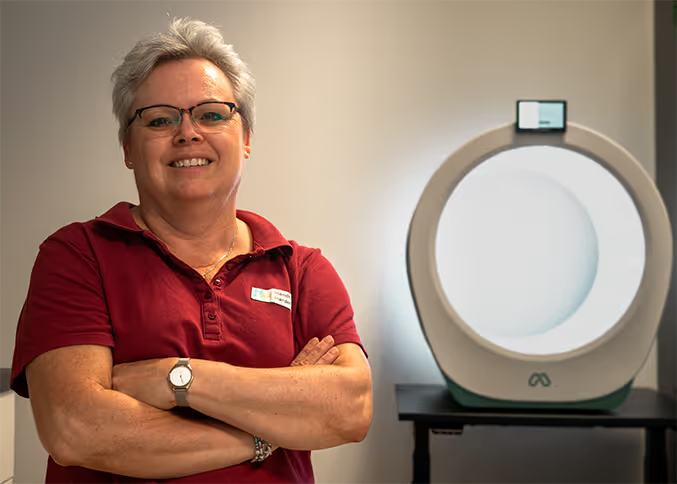
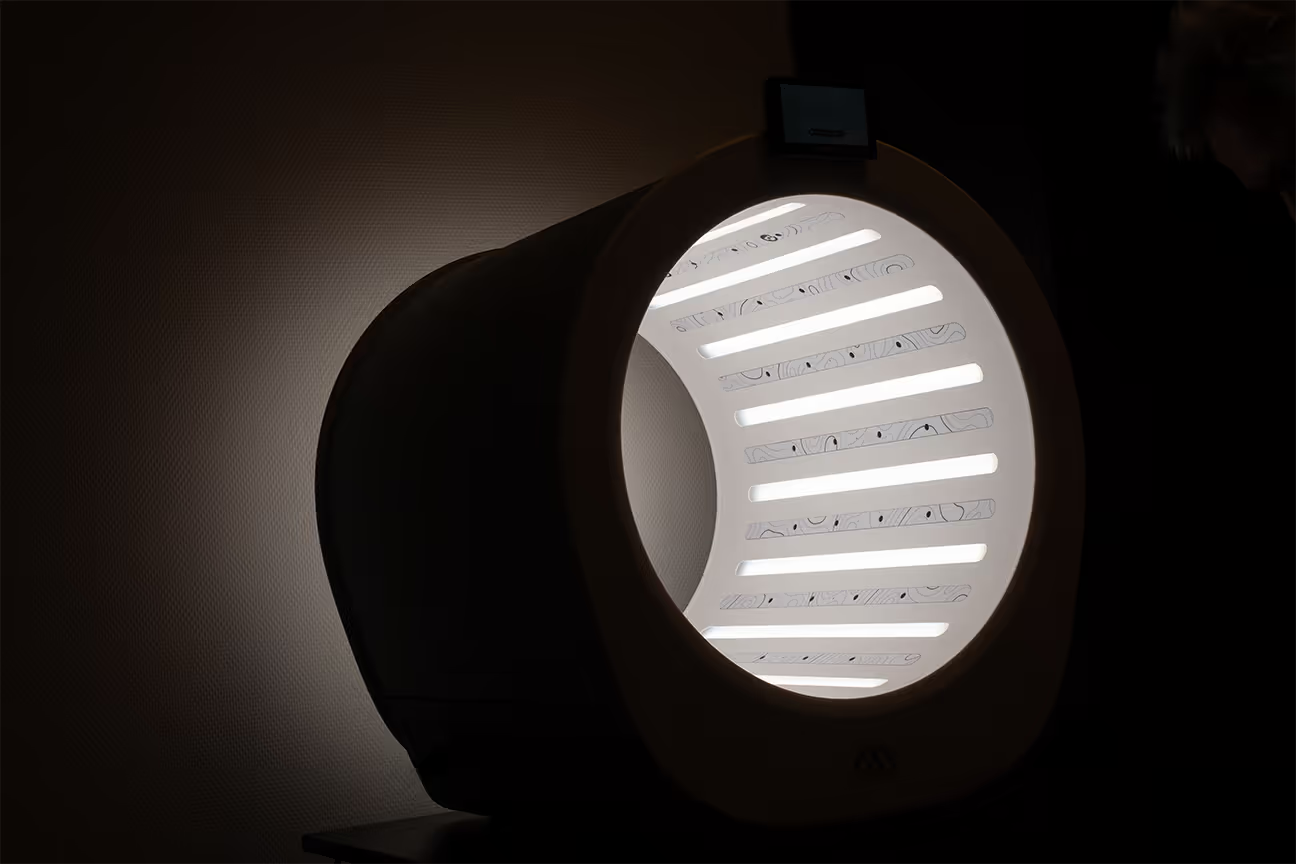
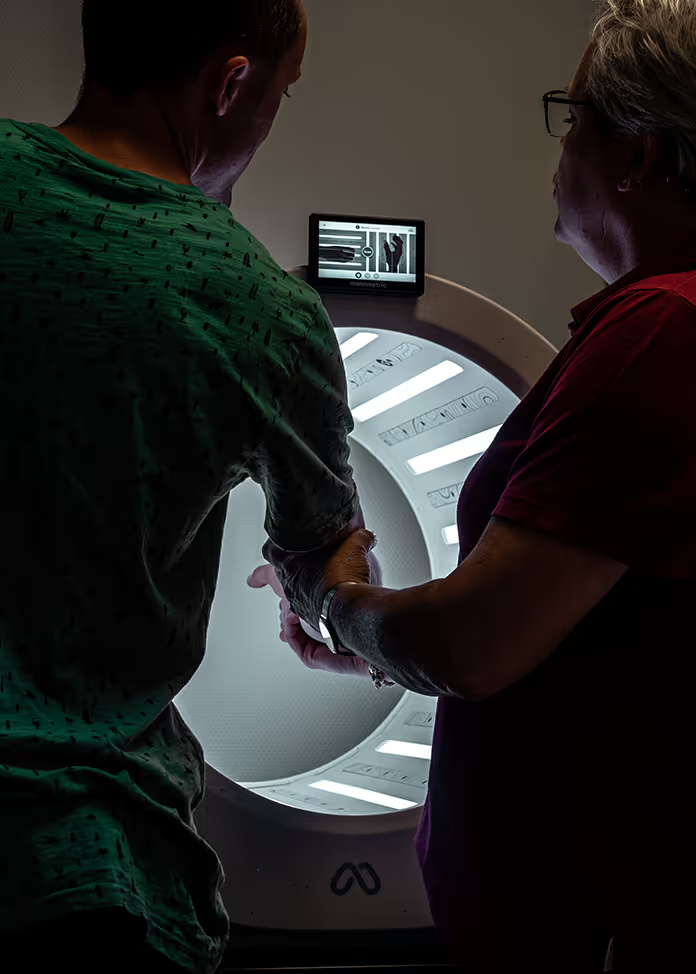
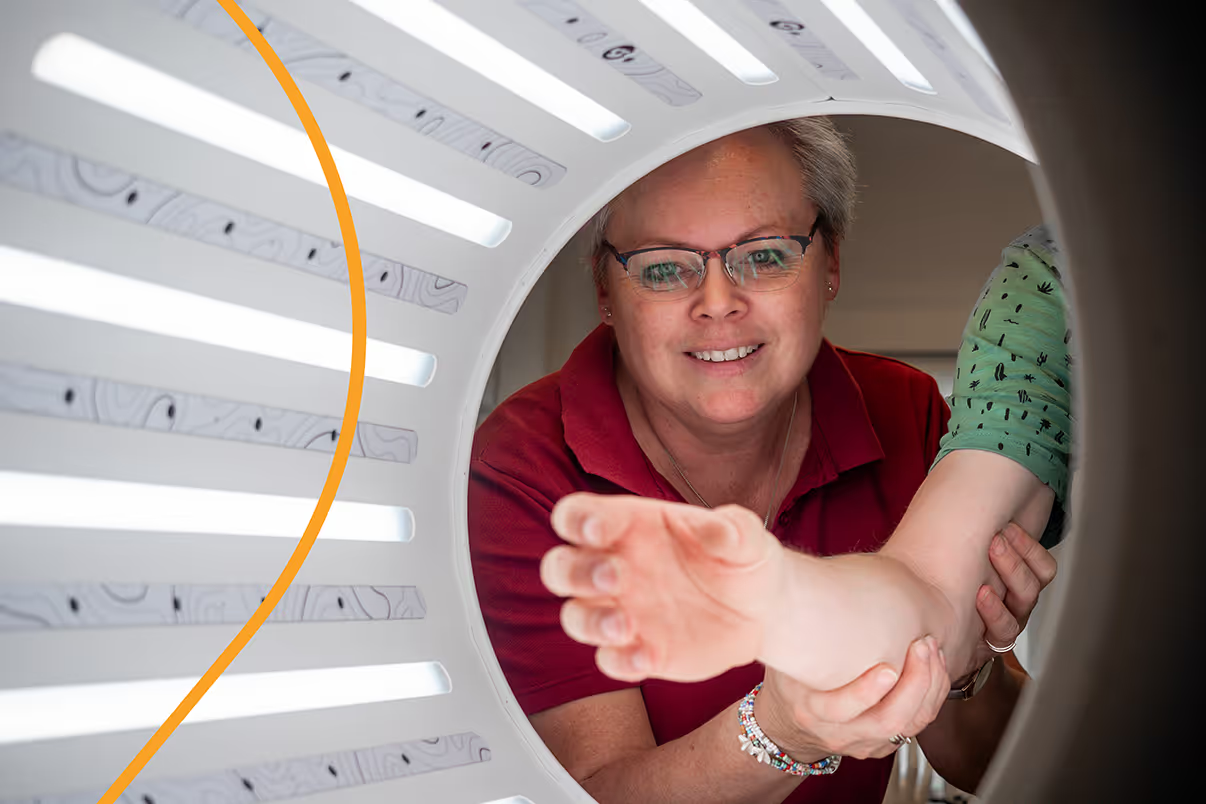
The Manometric scanner takes pride of place in the practice room. Just before our conversation, Kerensa did another scan, which she immediately sent to The Hague for a client with a calf farm who suffers from severe hand pain. Thanks to the ManoAir, another client was able to resume her hobby of making music – and as a musician herself, Kerensa knows better than anyone how important that is.
She had already seen the scanner at trade fairs, but thought: nevermind, we’re just a small company. “But last year, I got a call from Gerben, who said: we see that you have your own practice and are certified, we would like to install a scanner at your practice. This was very special because I don’t feel very big, and this is the Mercedes among scanners. And I see what the braces do: my patients are helped quickly and effectively, and it’s also a huge boost for my business.”
We've put together a short check to help you quickly find out if a brace is a good solution for you, including a personalised step-by-step plan to get started as soon as possible