CMC arthrosis (thumb base arthrosis)Causes and solutions
Pain when opening a jar or picking something up between your thumb and index finger. Sound familiar? It could be CMC arthrosis, also known as thumb base arthrosis or rhizarthrosis. It is the most common form of joint wear in the hand. On this page you can read what it is, how to recognise it, and what treatments are available.
What is CMC arthrosis?
CMC arthrosis is wear of the thumb base joint. CMC stands for carpometacarpal - the joint between the trapezium (a small wrist bone) and the first metacarpal bone of the thumb. This joint is what gives your thumb its unique range of movement.
In a healthy joint, a layer of cartilage allows the bones to glide smoothly over each other. With arthrosis, that cartilage becomes thinner and more irregular. The bones begin to rub against each other, causing pain, stiffness and reduced strength.
In advanced cases, the cartilage can disappear entirely. Bone spurs (osteophytes) may form around the joint, making the thumb stiffer and sometimes visibly misshapen.

Symptoms of CMC arthrosis
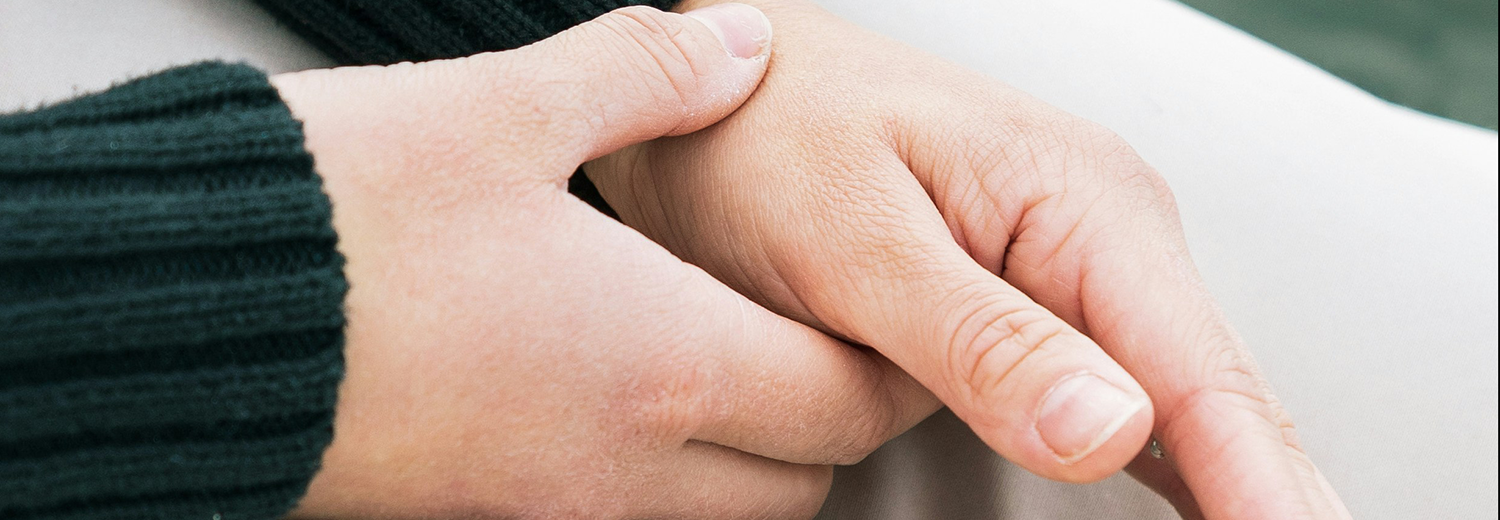
Symptoms usually develop gradually. Many people first notice that certain movements become more painful before constant pain sets in. Typical complaints include:
- Pain at the base of the thumb, just above the wrist
- Pain when pinching, twisting or gripping, for example opening jars, turning keys, doing up buttons
- Reduced strength in the thumb and hand
- A noticeable or visible swelling or bump at the thumb base
- Stiffness, especially in the morning or after periods of rest
- Sometimes a grinding or clicking sensation when moving the thumb
- In later stages: a thumb that no longer fully extends or takes on a deformed position
What causes CMC arthrosis?
CMC arthrosis develops through a combination of factors:
Age
Cartilage wears down as you get older. CMC arthrosis is most common in people over fifty.
Heredity
Arthrosis runs in families. If your mother or grandmother had it, your chances of developing it are higher.
Overuse
Occupations or hobbies involving repeated pinching and twisting movements (sewing, crocheting, gardening, craftwork) increase the risk.
Gender
Women are affected roughly three times more often than men, frequently around and after menopause.
A previous injury
A fracture, sprain or heavy strain on the thumb can weaken the joint and lead to arthrosis later on.
Hypermobility
If your ligaments are naturally very flexible, the joint moves more than average, leading to extra wear over time.
Treatment of CMC arthrosis
CMC arthrosis cannot be cured, lost cartilage does not come back. But the pain and restricted movement can usually be managed well. Treatment follows a step-by-step approach, and in most cases surgery is not necessary.

Rest, adjustment and pain relief
With early symptoms, it is important not to keep overloading the thumb. Painkillers or an anti-inflammatory gel can help. This is often enough to let a flare-up settle down.
Hand therapy and exercises
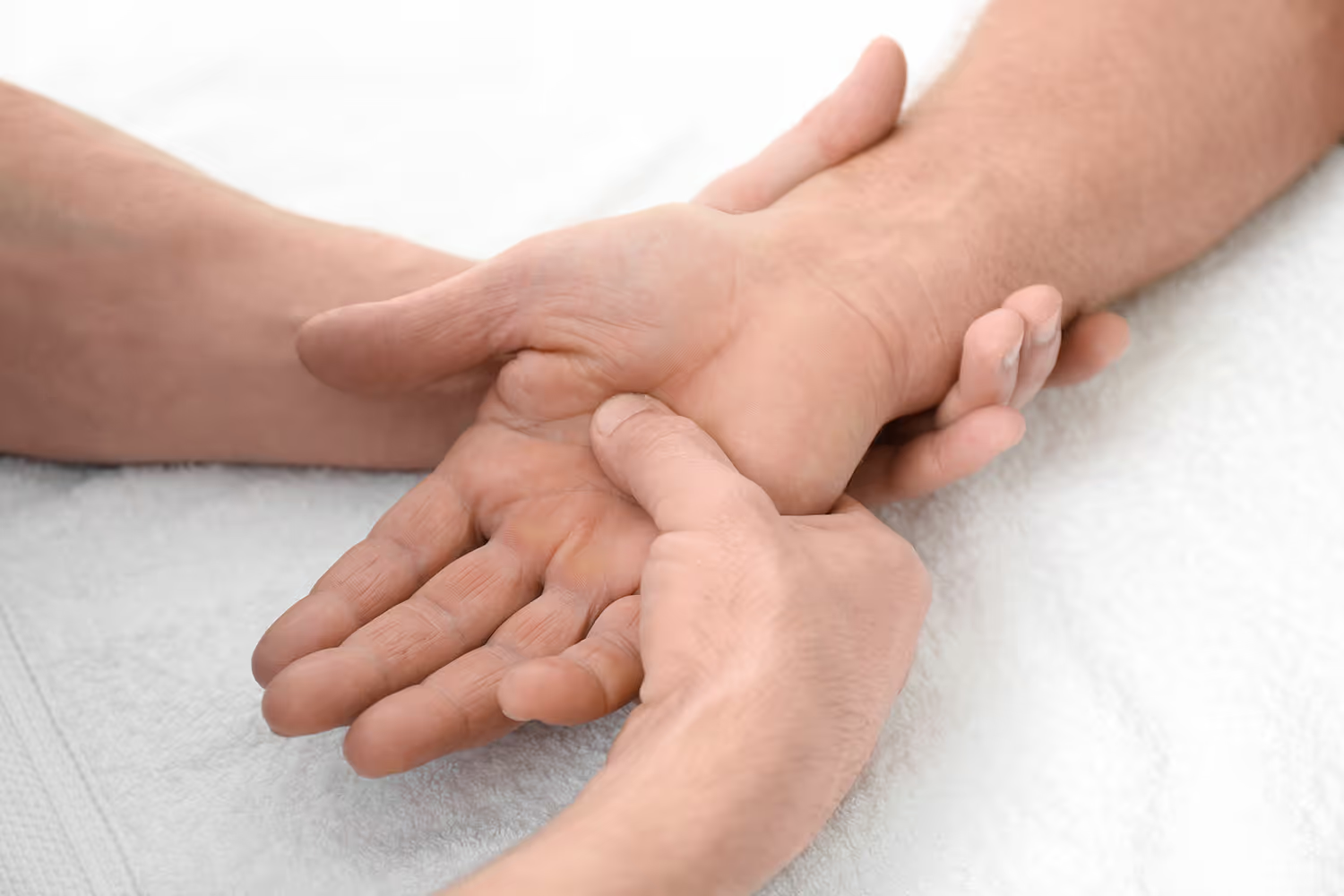
A hand therapist can teach you exercises that strengthen the muscles around the thumb joint. This does not reverse the wear, but can provide more stability and less pain.
A brace - preferably custom-made
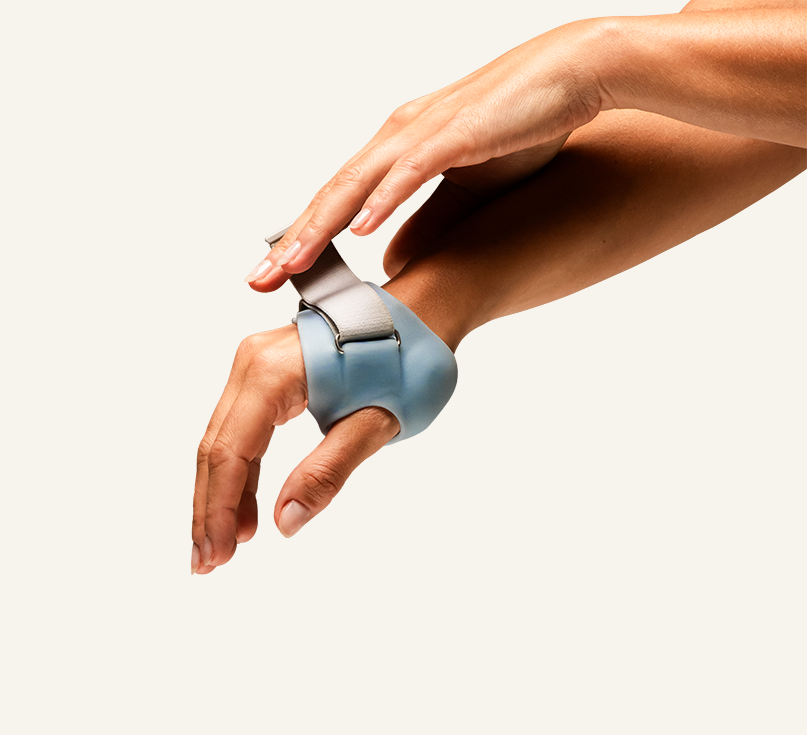
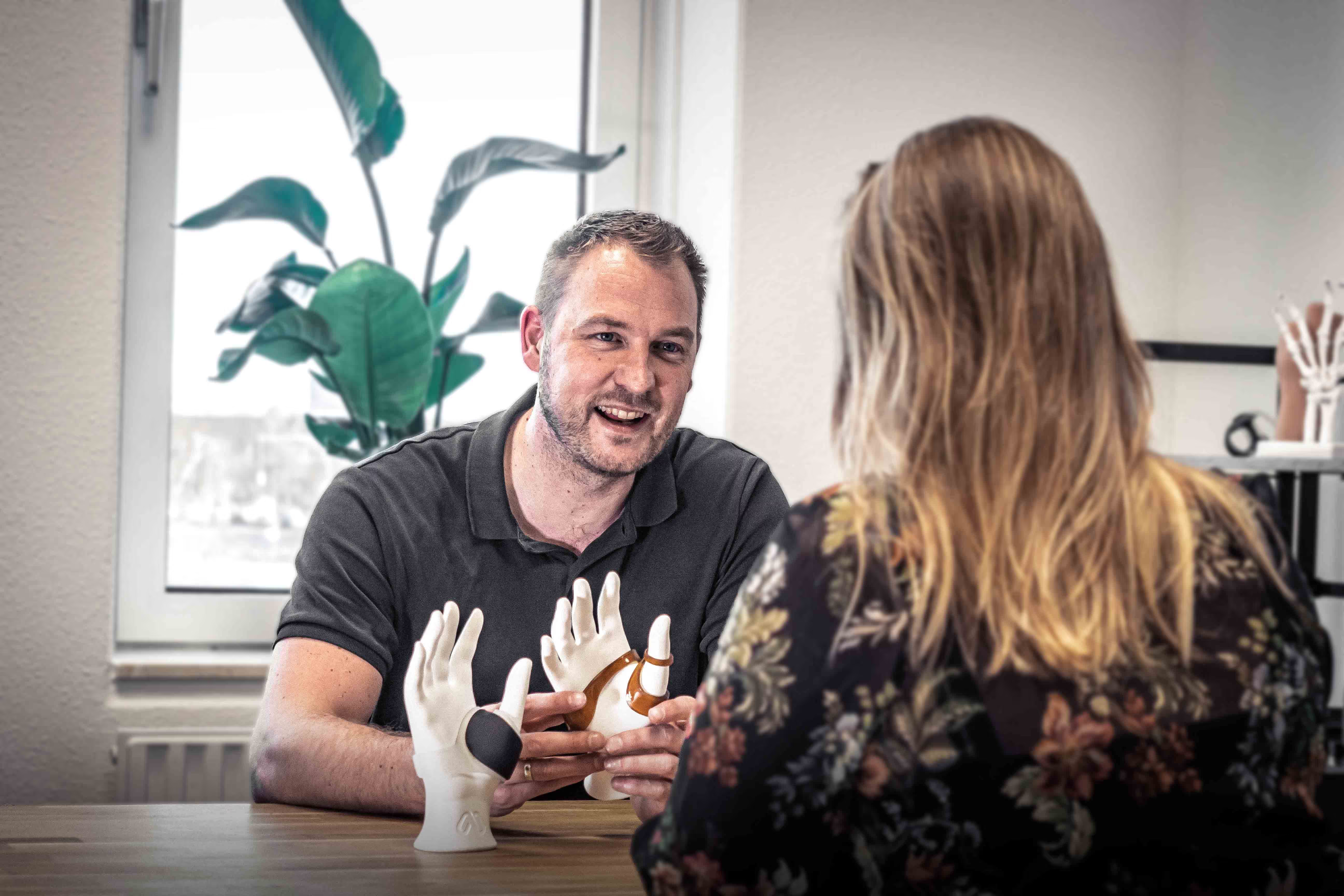
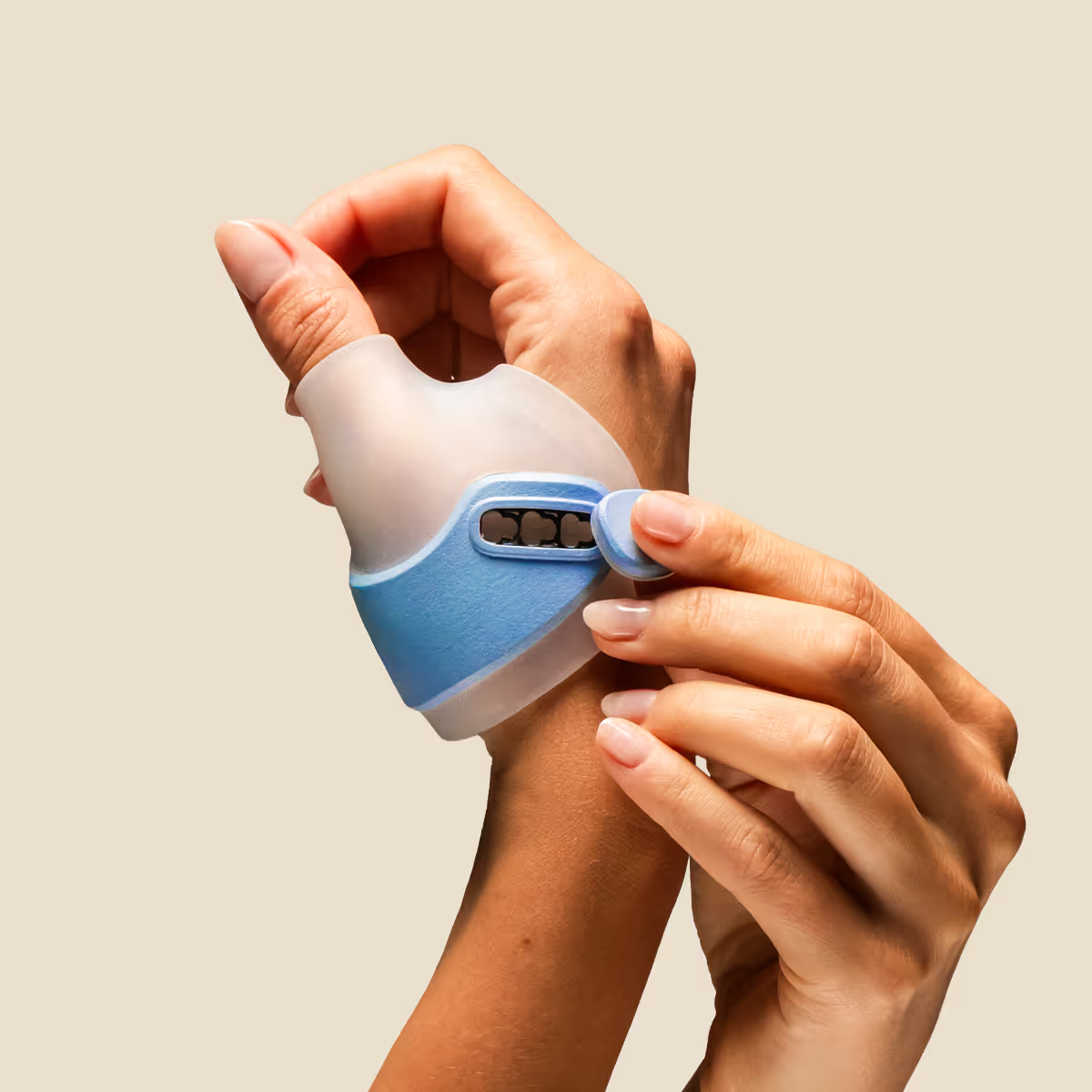
This is often the step that makes the difference, and at the same time the step most often skipped. A brace holds the thumb joint in a supported position and takes the pressure off it, so you can keep using your thumb without further loading the joint.
Off-the-shelf braces from a pharmacy are fine for mild or temporary complaints. But with persistent CMC arthrosis, a custom-made brace often works significantly better: it fits your hand precisely, supports exactly the CMC joint, and leaves the rest of your hand free.

Injections
For persistent pain, an injection into the joint can provide temporary relief. The effect usually lasts a few weeks to months.
It is a way of managing symptoms, not a solution — and more than two to three times per year is not recommended, as corticosteroids can damage cartilage over time.
Hyaluronic acid injections are an alternative, although the evidence for their effectiveness in CMC arthrosis is less clear-cut than for knee arthrosis, for example.
Surgery
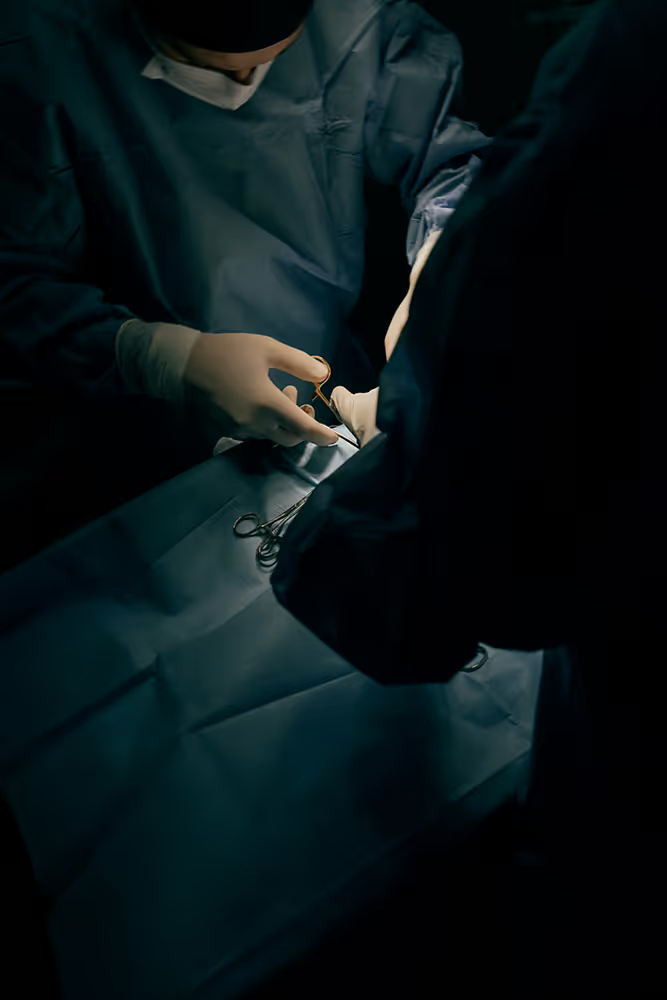
If all conservative treatments provide insufficient relief and symptoms are significantly limiting daily life, surgery may be an option. Several procedures exist, including:
- Trapeziectomy: partial or full removal of the trapezium bone
- Arthrodesis: the joint is fused in place
- Prosthesis: an artificial joint is placed
Surgery is effective but not without consequences. The hand will be in a cast for 1 to 6 weeks, followed by weeks of hand therapy. Full recovery typically takes 3 to 6 months. Some procedures (such as arthrodesis) result in permanent limited movement.
Why a custom brace?
CMC arthrosis is a serious condition that requires medical attention. Alongside medication, a custom-made brace can make a real difference to how you function day to day.
How do I know if a brace is right for me?
Whether a brace is a good treatment for your complaints depends on a few things: where exactly the pain is, how long you have had it, what is causing it, and what you do with your hands day to day. This varies from person to person and is determined by a medical specialist.
To help you get started quickly, we have created a short online test. You answer a few questions about your complaints and then receive an information package tailored specifically to your situation.
Was unsere Partner sagen:
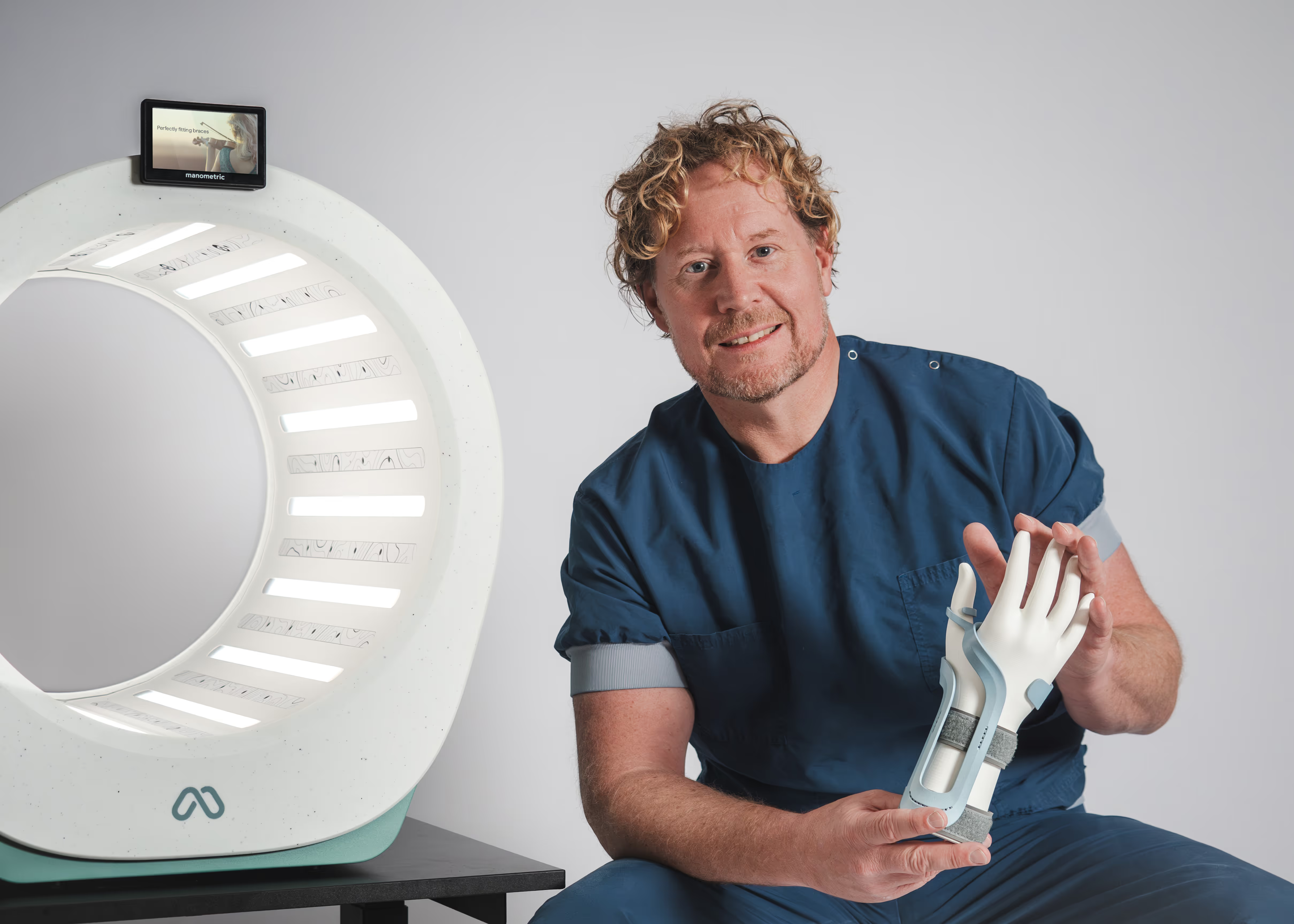
"Manometric Orthesen sind nicht nur sehr funktionell, sondern auch bequem und sehen gut aus. Ich stelle fest, dass Patienten mit manometrischen Orthesen sehr zufrieden sind.“

“Weil Manometric in der Abteilung präsent ist, wird den Patienten schneller und am selben Ort geholfen und wir behalten die Kontrolle.”
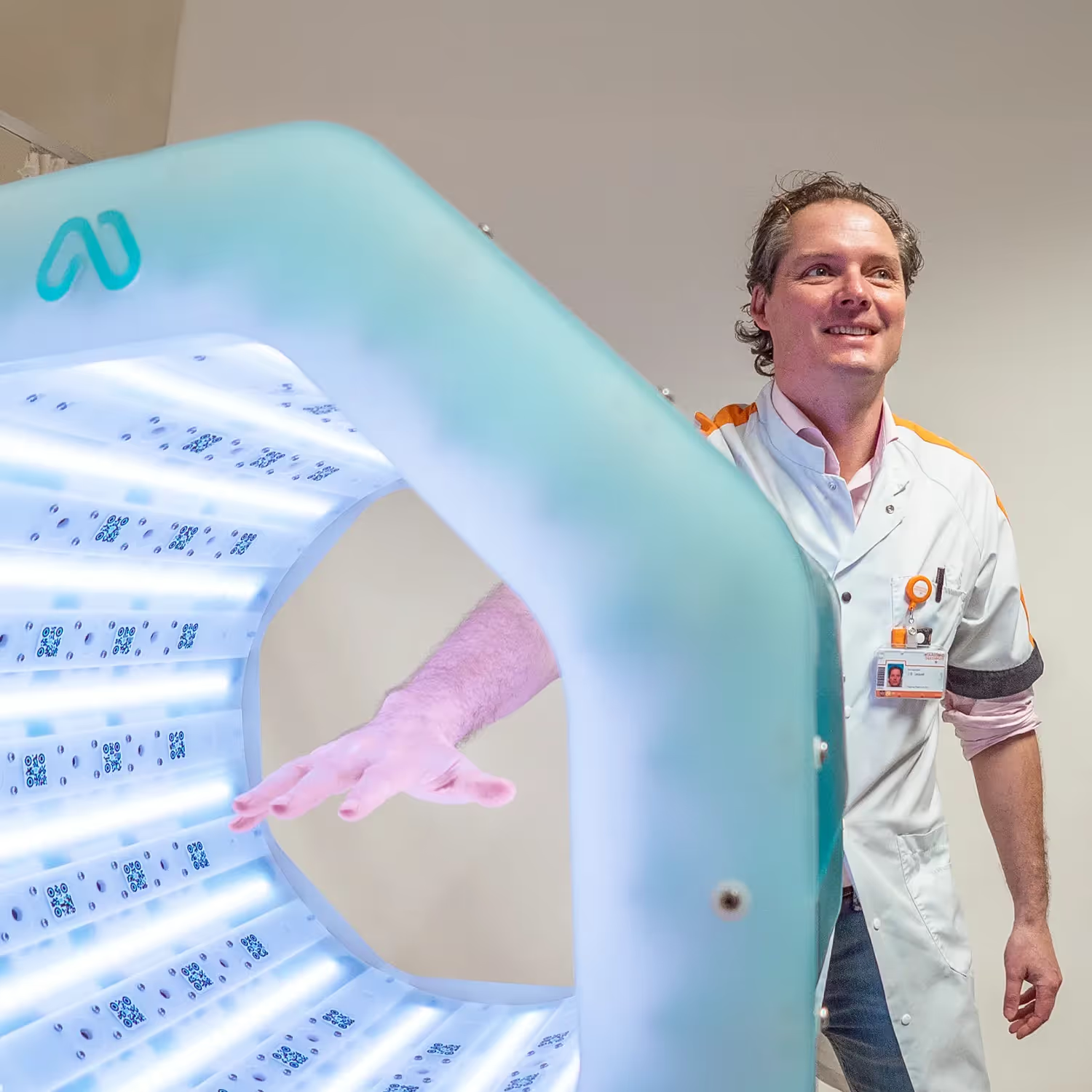
“Die Patienten schätzen es, dass sie sofort zu Ihnen kommen können”

“Eine patientenspezifische Schiene von Manometric, die auf einem Handscan basiert, ist einzigartig”